What "Fresh" Actually Means in Our Kitchen
Every restaurant says fresh. Here's the specific, checkable version — whole fish broken down in house, stocks made overnight, and the shortcuts we've spent nineteen years refusing.
"Fresh" is the most abused word on any menu in America. It costs nothing to print. So rather than say it again, here's the version you can actually check.
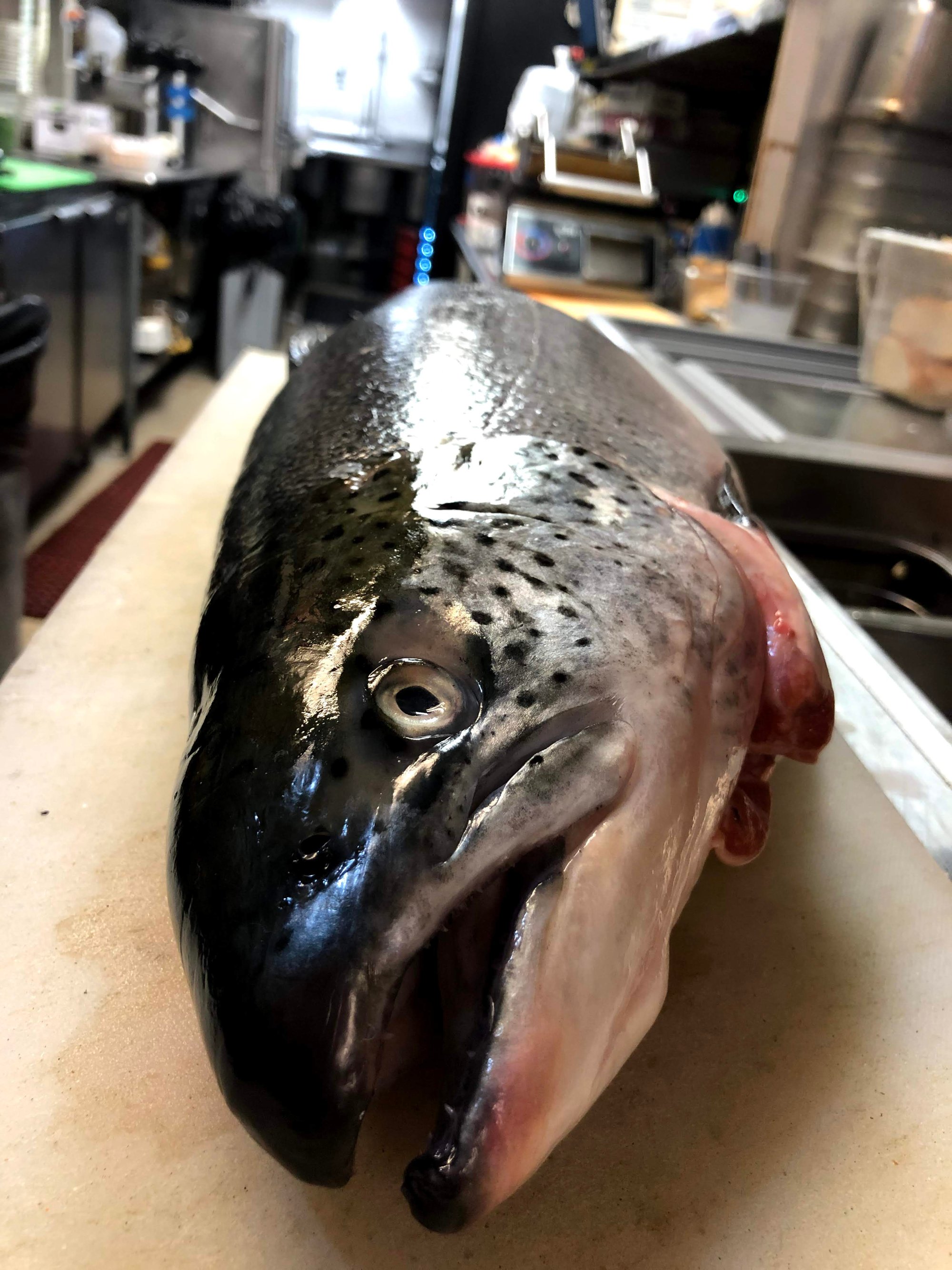
We buy whole fish and break it down ourselves when possible
A pre-cut fillet is a fish someone else already inspected, and it arrives with its evidence removed — no head, no gills, no eyes, nothing left to tell you how long it's been. Whole fish can't hide any of that.
It's more work and more waste. It's also the only way to know what you're serving, and the frames go into stock, so the waste isn't really waste.
Sourcing means relationships, not adjectives
We've bought from some of the same vendors across three buildings and nineteen years — Bethesda, the Promenade, now Rockville. That's the actual mechanism behind good product. They know what we'll accept and what's going back, and that reputation is worth more than any label on a case.
The corollary: the menu moves. If something isn't right on a given day, it doesn't get served that day. That's what a specials board is honestly for.
Why any of this matters to you
Because it's the difference between a fish that tastes like the ocean and one that tastes like the word "fish." And because doing it the slow way is the only reason a restaurant that opened in 2007 is still standing after two moves.
Nineteen years of saying no to the faster way is how a restaurant becomes a place.
Read the long version of that story, or come taste the argument.

Before you go — $10 for your next visit
Join Tony's Table and we'll email a $10 gift card plus Chef Tony's digital cookbook right away.